• Home
  • Dashboard
  • Browse Courses
  • FREE Student Registration
  • Bookstore
  • BuddyPress Social
    • Activity
    • Profile
    • Settings
    • Friends
    • Messages
    • Notifications
    • Groups
    • Login
    • Log Out
  • Articles
  • Contact
  • Cart
    • Checkout
    • Bookstore
    • My account

Ace your next Certification Exam!

Join Now
$0.00
No products in the cart
Go to shop
Coy AcademyCoy Academy
  • Home
  • Dashboard
  • Browse Courses
  • FREE Student Registration
  • Bookstore
  • BuddyPress Social
    • Activity
    • Profile
    • Settings
    • Friends
    • Messages
    • Notifications
    • Groups
    • Login
    • Log Out
  • Articles
  • Contact
  • Cart
    • Checkout
    • Bookstore
    • My account

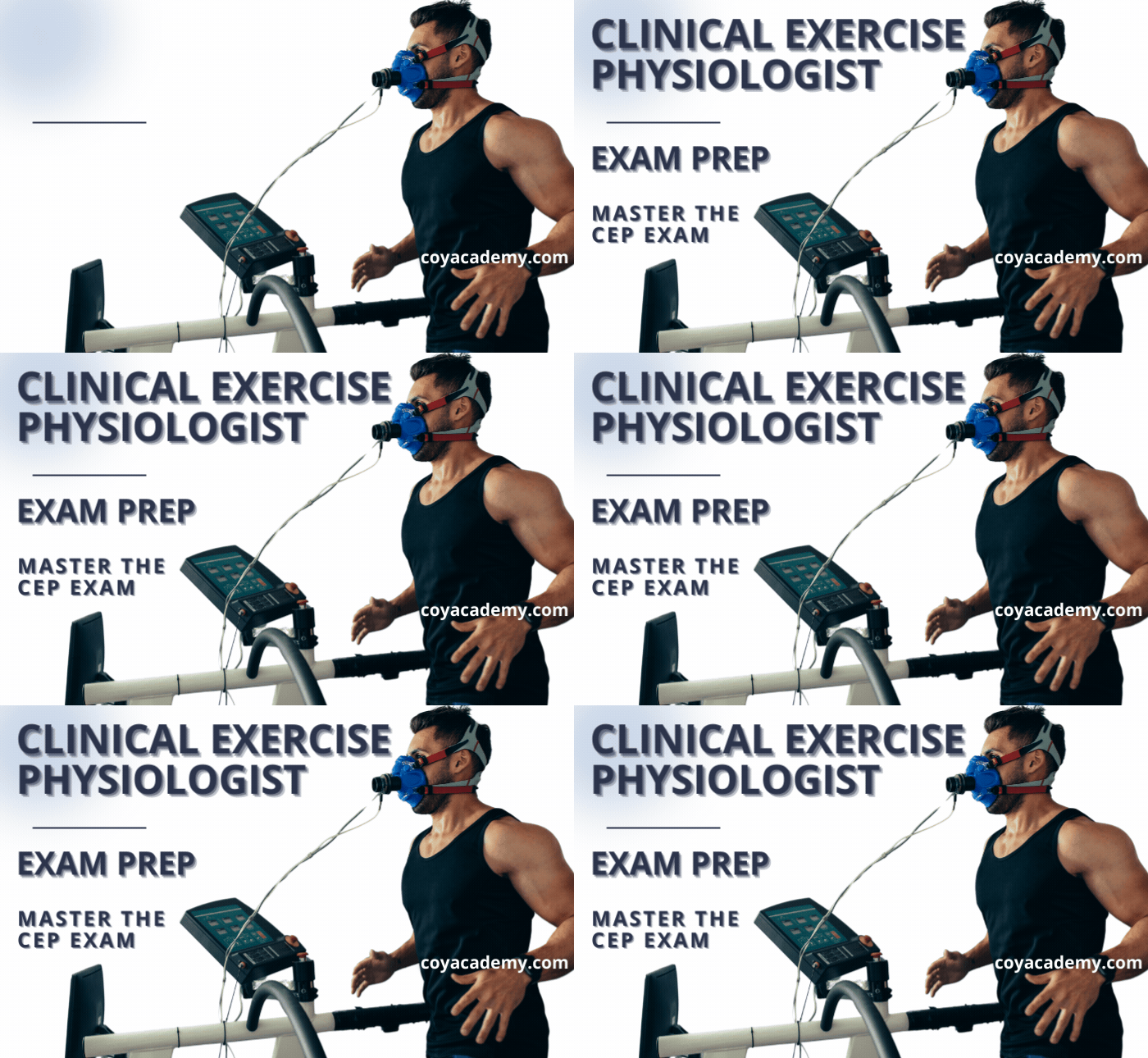
CEP Clinical Exercise Physiologist Exam Prep

Home » Courses » CEP Clinical Exercise Physiologist Exam Prep

CEP Clinical Exercise Physiologist Exam Prep

Jerry Coy
By Jerry Coy Categories: Academic and Test Prep, Featured, Health and Fitness, Professional Development
Wishlist Share
Share Course
Page Link
Share On Social Media
  • Course Info
  • Reviews
  • More
    • About Course

      Master the ACSM* CEP Exam: Comprehensive Clinical Exercise Physiologist Certification Prep Course.

      Unlock your potential and advance your career with our expertly designed ACSM Certified Clinical Exercise Physiologist (CEP) Exam Preparation Course. This comprehensive, in-depth program is meticulously crafted to help you achieve success on the ACSM CEP exam and excel in the field of clinical exercise physiology.

      Course Highlights:

      • Extensive Coverage: Our course encompasses all critical domains of the ACSM CEP exam, including Patient Assessment, Exercise Testing, Exercise Prescription, Exercise Training and Leadership, Education and Behavior Change, and Legal and Professional Responsibilities.
      • Expert Instruction: Learn from seasoned professionals with clinical and teaching experience, ensuring you receive the highest quality education.
      • Interactive Learning: Engage in hands-on practice, real-world case studies, and practical exercises reinforcing critical concepts and techniques.
      • Exam Strategies: Benefit from proven test-taking strategies, comprehensive review sessions, and practice exams designed to boost your confidence and performance on exam day.
      • Flexible Study Plan: Follow a structured study plan tailored to fit your schedule, allowing you to balance your professional and personal commitments while preparing for the exam.

      What You Will Learn:

      • In-depth understanding of the benefits and risks of exercise for clinical populations.
      • Proficiency in conducting and interpreting Graded Exercise Tests (GXT) and Electrocardiograms (ECG).
      • Comprehensive knowledge of pathophysiology and pharmacology related to cardiorespiratory diseases, diabetes, obesity, etc.
      • Effective exercise prescription and management techniques for special populations, including those with cardiovascular disease, diabetes, cancer, and pulmonary diseases.
      • Legal and professional responsibilities, ensuring adherence to ethical standards and regulatory guidelines.

      Why Choose Our Course?

      • High Success Rate: Our course is designed with a focus on results, with many of our students successfully passing the ACSM CEP exam on their first attempt.
      • Quality Resources: Gain access to essential textbooks such as “ACSM’s Clinical Exercise Physiology, 2nd Edition,” “ACSM’s Guidelines for Exercise Testing and Prescription, 11th Edition,” and “ACSM’s Certification Review, 6th Edition.”
      • Personalized Support: Our team of experts is ready to assist you with any questions or challenges you may face throughout your study journey.


      Textbook References: (click to view)

      • “ACSM’s Clinical Exercise Physiology, 2nd Edition“
      • “ACSM’s Guidelines for Exercise Testing and Prescription, 11th Edition“
      • “ACSM’s Certification Review, 6th Edition“


      Enroll Today and Take the First Step Toward Becoming a Certified Clinical Exercise Physiologist!

      Don’t miss this opportunity to enhance your professional skills and advance your career in clinical exercise physiology. Invest in your future with our comprehensive ACSM CEP Exam Preparation Course and join the ranks of successful certified professionals.

      *Disclaimer: Coy Academy is an independent educational provider and is not officially affiliated with the American College of Sports Medicine (ACSM). Our course materials are crafted with great detail and accuracy by experienced kinesiologists and physiologists to ensure comprehensive and high-quality content.

      Course Content

      Introduction

      • Introduction
      • Resourses and Textbooks
      • Course Objectives

      Module 1: Introduction to Clinical Exercise Physiology
      Section 1: Overview of the Clinical Exercise Physiologist Role Definition and Scope: What is a Clinical Exercise Physiologist (CEP)? Scope of practice and primary responsibilities. Settings and Populations: Common work settings (e.g., hospitals, rehabilitation centers, wellness programs). Populations served (e.g., cardiovascular, pulmonary, metabolic conditions). Section 2: Core Competencies and Knowledge Areas Foundational Knowledge: Basic sciences (anatomy, physiology, exercise science). Clinical sciences (pathophysiology, pharmacology). Skills and Abilities: Exercise testing and prescription. Patient assessment and risk stratification. Behavior change and education. Section 3: Professional Standards and Ethics Code of Ethics: ACSM code of ethics for clinical exercise physiologists. Professional Conduct: Standards of professional behavior. Legal and ethical considerations in clinical practice. Section 4: Preparation Strategies for the ACSM-CEP Exam Study Tips: Effective study techniques and time management. Utilizing study resources and materials. Practice Exams and Review: Importance of practice exams. Strategies for reviewing and retaining information. Section 5: Introduction to Key Resources and Textbooks Essential Textbooks: Overview of "ACSM's Clinical Exercise Physiology, 2nd Edition." Overview of "ACSM's Guidelines for Exercise Testing and Prescription, 11th Edition." Overview of "ACSM's Certification Review, 6th Edition." Supplementary Materials: Additional resources and recommended readings. Summary Each section is designed to build a solid foundation and understanding of the Clinical Exercise Physiologist role, core competencies, professional standards, and effective exam preparation strategies. Here is a concise breakdown of the sections: Overview of the Clinical Exercise Physiologist Role Core Competencies and Knowledge Areas Professional Standards and Ethics Preparation Strategies for the ACSM-CEP Exam Introduction to Key Resources and Textbooks

      • Overview of the Clinical Exercise Physiologist Role
        01:33
      • Lesson 2: Core Competencies and Knowledge Areas
      • Lesson 3: Professional Standards and Ethics
      • Lesson 4: Preparation Strategies for the ACSM-CEP Exam
      • Lesson 5: Introduction to Key Resources and Textbooks
      • Summary Session: Key Takeaways and Additional Important Content

      Module 2: Patient Assessment
      Module 2: Patient Assessment Overview: Module 2 focuses on the comprehensive assessment of patients, which is a critical first step in clinical exercise physiology. This module covers various aspects of patient assessment, including medical history, physical examination, risk stratification, and the use of diagnostic tools. The goal is to equip you with the knowledge and skills necessary to accurately evaluate patients and develop safe, effective exercise programs. Lesson 1: Medical History and Patient Interview Summary: Importance of taking a detailed medical history. Techniques for effective patient interviews. Key components of medical history: current health status, past medical history, family history, and lifestyle factors. Identifying contraindications to exercise and potential risk factors. Lesson 2: Physical Examination and Vital Signs Summary: Conducting a thorough physical examination. Measuring and interpreting vital signs: heart rate, blood pressure, respiratory rate, and temperature. Recognizing signs and symptoms that may affect exercise safety and effectiveness. Lesson 3: Risk Stratification and Pre-Participation Screening Summary: Methods for risk stratification based on ACSM guidelines. Tools and questionnaires for pre-participation screening (e.g., PAR-Q+). Categorizing patients into low, moderate, or high risk. Determining the need for medical clearance and further testing. Lesson 4: Functional Capacity and Mobility Assessment Summary: Evaluating functional capacity using various tests (e.g., 6-minute walk test, sit-to-stand test). Assessing mobility, flexibility, and balance. Identifying limitations and devising strategies to improve functional abilities. Lesson 5: Diagnostic Tools and Techniques Summary: Overview of common diagnostic tools used in patient assessment (e.g., ECG, spirometry). Understanding the indications, procedures, and interpretations of these tools. Integrating diagnostic findings into the overall patient assessment. Lesson 6: Behavioral and Psychosocial Assessment Summary: Assessing psychosocial factors that may impact exercise adherence and outcomes. Tools for evaluating mental health, motivation, and readiness for change. Strategies for addressing psychosocial barriers to exercise. Lesson 7: Nutrition and Lifestyle Assessment Summary: Evaluating dietary habits and nutritional status. Understanding the impact of lifestyle factors (e.g., smoking, alcohol use) on health and exercise capacity. Providing basic nutritional guidance and referring to dietitians when necessary. Lesson 8: Comprehensive Case Studies and Practical Application Summary: Applying assessment skills to real-world case studies. Developing comprehensive patient profiles. Creating individualized exercise programs based on assessment findings. Conclusion: Module 2 provides a thorough understanding of patient assessment in clinical exercise physiology. Mastering these lessons will enable you to conduct detailed evaluations, identify risks, and tailor exercise programs to meet the unique needs of each patient. This foundational knowledge is essential for ensuring safe and effective clinical practice.

      • Lesson 1: Medical History and Patient Interview
      • Physical Examination and Vital Signs
      • Lesson 3: Risk Stratification and Pre-Participation Screening
      • Lesson 4: Interpreting Medical and Exercise History
      • Lesson 5: Clinical Measurements and Vital Signs
      • Lesson 6: Functional and Clinical Exercise Testing
      • Lesson 7: Electrocardiography (ECG) Interpretation
        04:36
      • Lesson 8: Interpreting Clinical Lab Tests
      • Lesson 9: Graded Exercise Testing (GXT) Procedures
      • Lesson 10: Psychological and Emotional Assessment

      Module 3: Exercise Prescription

      • Lesson 1: Principles of Exercise Prescription
      • Lesson 2: Developing Aerobic Exercise Programs
      • Lesson 3: Developing Resistance Training Programs
      • Lesson 4: Developing Flexibility and Neuromotor Exercise Programs
      • Lesson 5: Special Populations Considerations
      • Lesson 6: Exercise Prescription for Cardiovascular Disease (CVD)
      • Lesson 7: Exercise Prescription for Pulmonary Disease
      • Lesson 8: Exercise Prescription for Metabolic Diseases
      • Lesson 9: Exercise Prescription for Musculoskeletal Disorders
      • Lesson 10: Monitoring and Modifying Exercise Programs

      Module 4: Exercise Testing

      • Lesson 1: Purpose and Types of Exercise Testing
      • Lesson 2: Pre-Exercise Test Screening and Preparation
      • Lesson 3: Conducting Submaximal Exercise Testing
      • Lesson 4: Conducting Maximal Exercise Testing
      • Lesson 5: Interpretation of Exercise Test Results
      • Lesson 6: Special Considerations for Exercise Testing in Diverse Populations
      • Lesson 7: Exercise Testing for Special Populations

      Module 5: Exercise Training and Leadership

      • Lesson 1: Principles of Exercise Training
      • Leadership and Communication Skills for Exercise Professionals
      • Lesson 3: Motivational Techniques and Client Engagement
      • Lesson 4: Group Exercise Leadership
      • Lesson 5: Safety and Emergency Procedures in Exercise Settings
      • Lesson 6: Implementing Technology in Exercise Training

      Module 6: Education and Behavior Change

      • Lesson 1: Principles of Education and Behavior Change
      • Lesson 2: Designing Effective Health Education Programs
      • Lesson 3: Counseling Techniques and Strategies
      • Lesson 4: Evaluating and Adjusting Health Education Programs
      • Lesson 5: Cultural Competency in Health Education

      Module 7: Legal and Professional Responsibilities

      • Lesson 1: Legal Considerations in Clinical Exercise Physiology
      • Lesson 2: Professional Standards and Ethics in CEP
      • Lesson 3: Risk Management and Liability
      • Lesson 4: Documentation and Records Keeping

      Module 8: Special Populations

      • Lesson 1: Exercise for Older Adults
      • Lesson 2: Exercise for Individuals with Cardiovascular Disease
      • Lesson 3: Exercise for Individuals with Diabetes
      • Lesson 4: Exercise for Individuals with Obesity
      • Lesson 5: Exercise for Individuals with Respiratory Conditions
      • Lesson 6: Exercise for Children and Adolescents
      • Lesson 7: Exercise for Individuals with Musculoskeletal Disorders
      • Lesson 8: Exercise for Individuals with Neurological Conditions
      • Lesson 9: Exercise for Individuals with Metabolic Disorders
      • Lesson 10: Exercise for Individuals with Cancer
      • Lesson 11: Exercise for Individuals with Renal Disease

      Appendices

      • Appendix A: Glossary of Key Terms
      • Appendix B: Key Formulas and Calculations
      • Appendix C: Quick Reference Guides
      • Appendix D: Exercise Prescription Templates
      • Appendix E: Clinical Exercise Testing Protocols
      • Appendix F: Normal Values and Reference Ranges
      • Appendix G: Medication Effects on Exercise
      • Appendix H: Professional Resources and Further Reading
      • Appendix I: Legal and Ethical Guidelines
      • Appendix J: Emergency Procedures and Safety Checklists
      • Appendix K: List of Acronyms

      Student Ratings & Reviews

      No Review Yet
      No Review Yet
      $259.00 $440.00
      • Expert
      • July 25, 2024 Last Updated
      Hi, Welcome back!
      Forgot Password?
      Don't have an account?  Register Now

      A course by

      Jerry Coy
      Jerry Coy
      Published Author and Science Teacher

      Material Includes

      • The materials included are:
      • Extensive Modules covering all exam objectives
      • Practice Quizzes and Exams for effective learning
      • Comprehensive Study Guides to aid in understanding

      Requirements

      • This course recommends a Bachelor's or higher in Kinesiology or Exercise Science. However, a degree is not required for this course. ACSM requires one for the certification exam.

      Audience

      • This course is designed for individuals who have completed a bachelor's degree in kinesiology or exercise science and seek certification as a Clinical Exercise Physiologist.
      Get Started Student Registratiion

      © 2023 Coy Academy

      This content is copyrighted by Coy Academy. For the sake of education and integrity, please don’t share this material. If you find our platform and courses beneficial, kindly direct your friends and colleagues to our website at coyacademy.com. Thank you for your understanding.

      Follow Us

      Read Our eBook

      Disclaimer

      The information and content provided on Coy Academy’s website (“Platform”) are for educational and informational purposes only. The courses, materials, and resources available on the Platform are not a substitute for professional advice, consultation, or treatment. Always seek the advice of qualified instructors, experts, or professionals regarding specific questions or concerns you may have. Coy Academy is not affiliated with any certification exam administering bodies. Our courses are designed to assist in exam preparation only. Exam fees are not included in the course fees at Coy Academy. Success on the exams depends on the individual effort of the student, and Coy Academy does not guarantee passing any certification exams. read more

      ©2026 Coy Academy - Design by AAJS Business Solutions Hosted by Bluehost