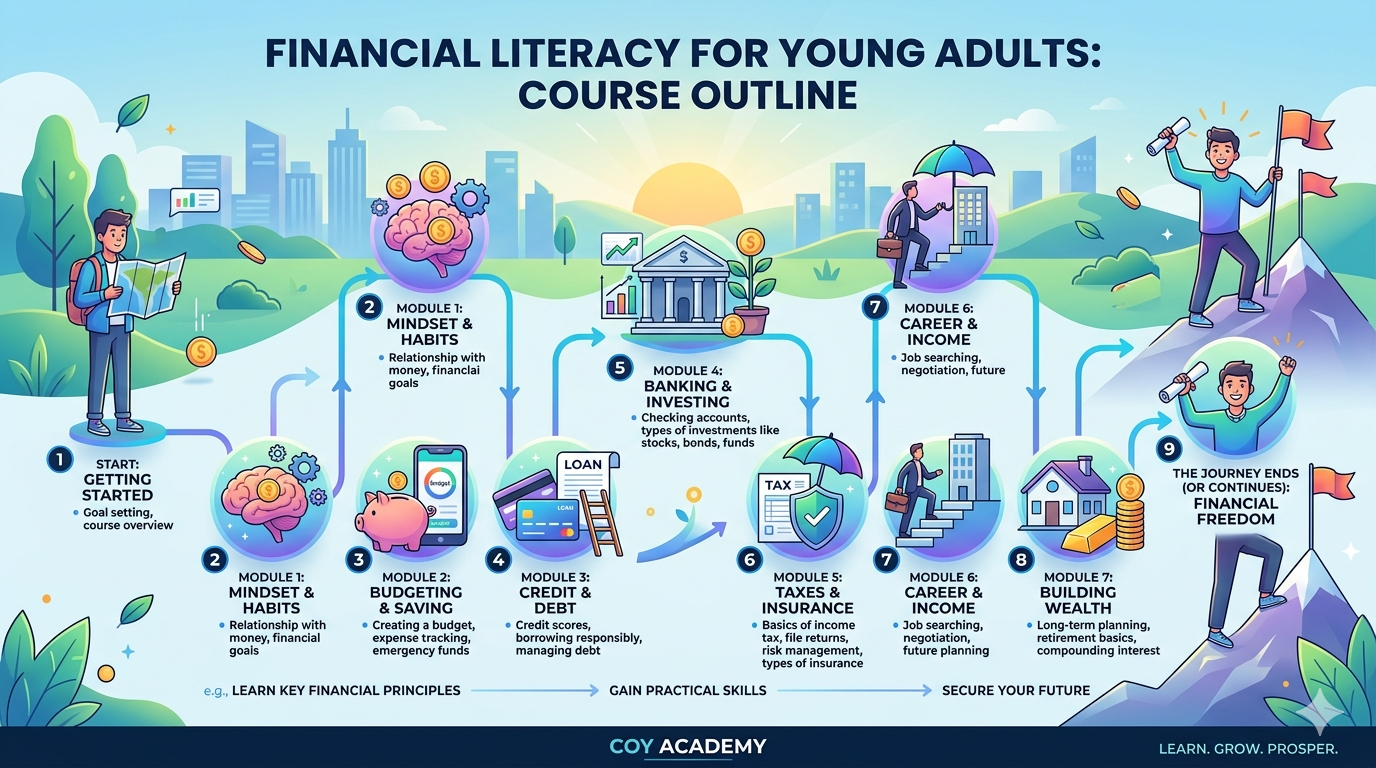
Financial Literacy Course Outline
Module 1: Introduction to Financial Literacy
- Lesson 1: Why Financial Literacy Matters
- Importance of financial literacy
- Consequences of poor financial decisions
- Lesson 2: Setting Financial Goals
- Short-term vs. long-term goals
- SMART goal-setting framework
- Lesson 3: Basic Financial Terminology
- Standard financial terms (e.g., income, expenses, savings, debt)
Module 2: Understanding Income and Expenses
- Lesson 1: Sources of Income
- Job earnings, allowances, gifts, side hustles
- Understanding gross vs. net income
- Lesson 2: Tracking Expenses
- Fixed vs. variable expenses
- Tools for tracking spending
- Lesson 3: Creating a Personal Budget
- Basics of budgeting
- The 50/30/20 rule (needs, wants, savings)
Module 3: Saving and Investing Basics
- Lesson 1: The Importance of Saving
- Emergency funds
- Saving for short-term and long-term goals
- Lesson 2: Introduction to Investing
- Basic investment concepts
- Difference between saving and investing
- Lesson 3: Understanding Interest and Compounding
- Simple vs. compound interest
- How compound interest works over time
Module 4: Assets vs. Liabilities
- Lesson 1: Defining Assets and Liabilities
- What are assets, and how do they generate wealth
- Identifying liabilities and their impact on finances
- Lesson 2: Building Wealth with Assets
- Types of assets (e.g., stocks, real estate)
- Benefits of asset ownership
- Lesson 3: Avoiding Debt and Liabilities
- Understanding debt
- Strategies to avoid unnecessary liabilities
Module 5: Smart Spending and Budgeting
- Lesson 1: Needs vs. Wants
- Differentiating between essential and non-essential expenses
- Making mindful spending decisions
- Lesson 2: Creating and Sticking to a Budget
- Detailed budgeting techniques
- Tools and apps for budget management
- Lesson 3: Avoiding Impulse Purchases
- Recognizing triggers for impulse buying
- Strategies to resist impulsive spending
Module 6: Banking and Managing Accounts
- Lesson 1: Types of Bank Accounts
- Checking vs. savings accounts
- How to choose the proper account for your needs
- Lesson 2: Managing Your Bank Accounts
- Monitoring transactions
- Tips for avoiding overdraft fees
- Lesson 3: Online and Mobile Banking
- Benefits and risks of digital banking
- How to use banking apps securely
Module 7: Credit and Debt Management
- Lesson 1: Understanding Credit
- What is credit, and how it works
- Different types of credit (e.g., credit cards, loans)
- Lesson 2: Building and Maintaining Good Credit
- Importance of a good credit score
- Strategies for building credit
- Lesson 3: Managing and Paying Off Debt
- Understanding interest rates
- Effective debt repayment strategies
Module 8: Investing for the Future
- Lesson 1: Introduction to Low-Fee Index Funds
- What are index funds
- Benefits of investing in low-fee index funds
- Lesson 2: Retirement Accounts for Young Adults
- Understanding retirement accounts (e.g., IRAs, 401(k)s)
- Benefits of starting early
- Lesson 3: Diversifying Your Investment Portfolio
- Importance of diversification
- Essential strategies for diversifying investments
Module 9: Choosing Financial Advisors
- Lesson 1: Types of Financial Advisors
- Differences between fee-only and commission-based advisors
- How to find a trustworthy advisor
- Lesson 2: Questions to Ask Your Financial Advisor
- Key questions to assess an advisor’s suitability
- Understanding fee structures
- Lesson 3: Avoiding Predatory Practices
- Red flags to watch for in financial advising
- How to protect yourself from being overcharged
Module 10: Financial Planning and Goal Setting
- Lesson 1: Creating a Financial Plan
- Steps to developing a financial plan
- Tools for financial planning
- Lesson 2: Reviewing and Adjusting Your Plan
- Importance of regular financial reviews
- How to adjust your plan as your life changes
- Lesson 3: Staying Motivated and Accountable
- Tips for maintaining financial discipline
- How to stay on track with your financial goals
Module 11: Financial Safety and Security
- Lesson 1: Protecting Personal Information
- Importance of safeguarding financial information
- Tips for preventing identity theft
- Lesson 2: Recognizing and Avoiding Scams
- Common financial scams targeting teens and young adults
- How to identify and avoid scams
- Lesson 3: Safe Online Shopping Practices
- How to shop safely online
- Protecting your information during transactions
Module 12: Real-World Financial Scenarios
- Lesson 1: Handling Unexpected Expenses
- Preparing for financial emergencies
- Strategies for managing unexpected costs
- Lesson 2: Making Big Purchases Wisely
- How to save for significant expenses (e.g., car, education)
- Evaluating whether to buy or lease
- Lesson 3: Financial Decision-Making Case Studies
- Analyzing real-world financial scenarios
- Learning from common financial mistakes
Module 13: Conclusion and Next Steps
- Lesson 1: Reviewing Key Concepts
- Recap of essential financial principles
- Important takeaways from the course
- Lesson 2: Planning Your Financial Future
- Setting long-term financial goals
- Creating a roadmap for financial success
- Lesson 3: Resources for Continued Learning
- Recommended books, websites, and tools
- How to stay updated on financial topics
This course will equip teens and young adults with the knowledge and skills they need to make intelligent financial decisions, avoid common pitfalls, and build a solid financial foundation for the future.